• How I evaluate personal safety at tech conferences

    How I think about safety at the events has changed dramatically over the past 10 years. When I was young and unmarried, I didn’t think about it at all. I’m 6’2”, heavy set, and broad shouldered; no one is going to mess with me. And regarding emotional safety, I may have had worries or concerns about fitting in or being accepted, but I never thought of it as safety.

    That has changed over time, as I learn that other people’s lived experiences were dramatically different than mine. It changed when my female-presenting spouse was harassed at a SQL Saturday speaker’s dinner. I had made a joke to a speaker I just met that “my spouse only wears dresses 3 times per year, and one was at our wedding.” He made a joke in kind that would have been appropriate if we were friends for years. We had just met. Later that night when he made another comment, I had to quickly shut it down.

    My appreciation for safety again changed when my husband came out as transgender. We’ve thankfully never had an issue at any event, and everyone we’ve talked to has been warm and welcoming. But now what was once background noise for me is something I pay close attention to, hoping I don’t hear sirens.

    How should we think about safety?

    The way many lucky people like myself normally think about the word safety is unhelpful in this context. 10 years ago, I would hear the word and think about muggings and stabbings. Now, I think a better analogy is food safety.

    Think about how you evaluate leftovers in your fridge to see if they have gone bad. You think about how old they are, you give them a look, and a sniff. I can count the number of times I’ve had food poisoning on one hand, I will regularly eat undercooked food. I am privileged in that regard. But many of us have had bad experiences with old food. We’ve found mold or had food poisoning. One bad experience and you start just throwing it out instead of risking it.

    Think about how you evaluate restaurants. Do you look at the inspection notices? If your friend says they had food poisoning there once, how does that change your evaluation? You might write it off as bad luck. What if three of your friends have had food poisoning at a restaurant? You’d probably never go there and would tell others to avoid it as well. It’s rarely a binary decision.

    For some people, food safety is deadly serious. If you have a peanut allergy, one thoughtless mistake could kill you. For me, I’m a diabetic and I learned the hard way that IHOP puts pancake batter in their scrambled eggs. What the heck! If I hadn’t tasted something was off, that could have sent me to the hospital. And that’s often the issue, I can eat peanuts thoughtlessly and safely. But for others it could harm them or kill them.

    How I evaluate safety at conferences

    So coming back to our topic, imagine if at every single restaurant you didn’t know how fresh the food was, and no one could tell you. What would you do? You would inspect it. You’d check for mold or hairs, you would give it a sniff. You might give it a small taste. Or maybe you’d provide your own food because of too many past incidents.

    Based on my own personal lived experiences and what I’ve heard from others, I believe this is what it’s like to be a woman or queer in IT. You always have to inspect and sniff the food. And unsurprisingly, the chef is likely to take this personally as an insult. “I would never serve bad food!”. Well, maybe not intentionally you wouldn’t. But I can’t afford to assume that.

    In the book, The Speed of Trust, trust comes down 2 things at the end of the day: character and competence. As a speaker and an attendee, I’m constantly sniffing out these two things out at every single event I attend, all while trying not to offend the chef.

    Character in this case is your ability to acknowledge and understand these issues. If your conference does not have a Code of Conduct, maybe you don’t understand the benefits of one, or you need help writing it thoughtfully. If your conference is adamantly unwilling to have a code conduct, that’s like denying food inspectors into your establishment because your chefs are “well-trained”. In which case, I have no interest in attending or supporting your event. You could send me to the hospital.

    Competence is your ability to execute on your character. You may have the best of intentions here. But if you espouse a commitment to diversity or new speakers at your conference, but have a very short CFS or 100% blind submissions, that sends mixed messages. While I can’t determine the cause, I will assume that either your values are false or that there is a challenge in your ability to execute on them. Sometimes it’s totally innocent reasons, but if I have a peanut allergy I don’t give a damn about whether it was an accident that my meal included peanuts. I simply can’t afford to ignore it, for my own safety.

    So what can you do to signal safety?

    Simply put, talk the talk and walk the walk.

    Have a code of conduct, have a policy for harassment. But more than that, think about how you support unrelated marginalized groups. If a conference provides child support, I will see that as a “smell” of good character and competence even if I don’t have a child. Conversely, if they put pronouns in the bios but have 0 other DEI initiatives, I will read that as virtue signaling. I could be wrong in either case, but all I have are sniffs and tastes.

    Talk the talk and walk the walk.

  • Why I’m struggling with learning Azure Synapse

    So, for 2023 I’ve decided that I want to learn Azure Synapse. I want to be able to make training content on it by the end of the year. I’d like to be able to consult on it in two years. And right now, I am absolutely banging my head against the learning curve. Let’s talk about why.

    The integration problem

    Occasionally, I’ll describe Power BI as “3 raccoons in a trench coat: PowerQuery, DAX, and visuals”. What I mean by that is it is 3 separate products masquerading as a single, perfectly cohesive  product. Each of those pieces started out as separate Excel add-ins, and then were later combined into a single product. And it shows.

    The team at Microsoft have done a great job of smoothing out the rough edges, but you still occasionally run into situations where the integration isn’t perfect. A simple example is where should I create my date tables in Power BI? Should I use M or DAX? The answer is either! Both of them have good tooling for it. Because these tools evolved separately, there’s going to be some overlap and there’s going to be some gaps.

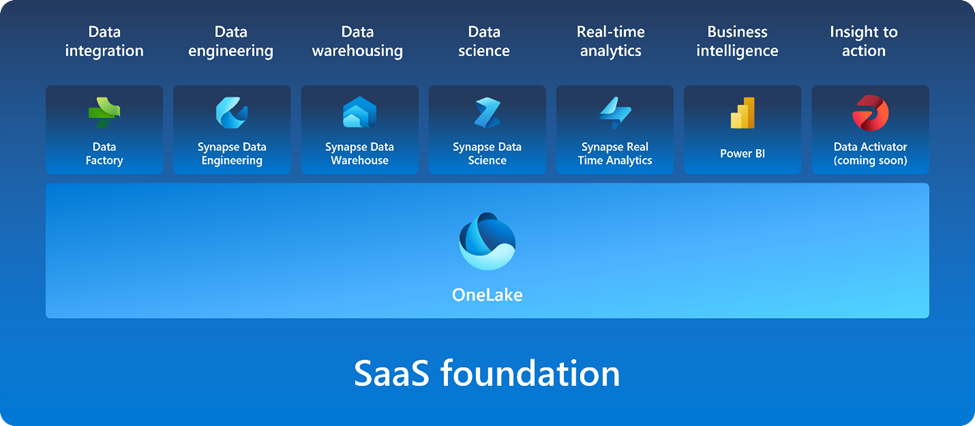
    Azure in general (and Synapse in particular) has this problem. If Power BI is 3 raccoons in a trench coat, Synapse is 10 of them wobbling from side to side. The power of the cloud is that Microsoft can quickly iterate and provide targeted tooling for specific needs. If a tool is unpopular or unsuccessful, like Azure Data Catalog, Microsoft can build a replacement, like Azure Purview.

    But this makes learning difficult. Gone are the days of a monolithic SQL Server product where, in theory, all of the parts (SSRS/SSIS/SSAS) are designed to fit cohesively into a single product. Instead, Microsoft and us data professionals must provide the glue after the fact, after these products have evolved and taken shape. Unfortunately, this means understanding not only how these pieces fit together but when in practice they don’t.

    This is the curse of the modern cloud professional. We are all generalists now.

    The alternatives problem

    The other big problem is just like the issue with M and DAX, there are multiple tools available to do the same job. And while M and DAX compete on the borders or on the joints, Azure Synapse has tools that are direct competitors. The most prominent example is the querying engines.

    From what I understand, Azure Synapse has 3 main ways to access and process data: dedicated SQL pools , dedicated Spark pools, and SQL Serverless. Imagine if I told you that you had 3 ways to cut things: a scalpel, a butter knife, and a wood saw. These all cut things, it’s true. But then imagine if I immediately dived into what type of metal we use for our butter knives, that our saws have 60 teeth on them, etc.

    It would be a little disorienting. It would be a little frustrating.

    You might wonder how we ended up with 3 different tools that do similar things. You might wonder when you should use which. You might wonder when you shouldn’t use one of them especially. Giving your learners the general shape and parameters of a tool is a big deal.

    Imagine if a course on Azure ButterKnife™ instead started with “This is Azure ButterKnife™, it is ideal for cutting food especially soft food. It shouldn’t be used on anything harder than a crispy piece of toast. It originally started as a way to spread butter on toast.” It would take 20 seconds to orient the learner, and if they were looking for a way to cut lumber, they could quickly move on.

    The expertise problem

    When I was doing a course on ksqlDB for Kafka, I ran into a particular problem. Because ksqlDB was a thin layer of SQL on top of a well-known Kafka infrastructure, so much of the content assumed you were experienced and entrenched in the Kafka ecosystem. It quickly covered terms and ideas that made sense in that world, but no sense if you were coming from the relational database world.

    And a thing I would keep asking, to no one in particular, was “How did we end up here?”. What was the pain point that caused people to create an event stream technology and then put a SQL querying language on top instead of just using a relational database. I talk about this more on a podcast episode with the company that made ksqlDB.

    Azure Synapse has a similar problem. It is an iteration on various technologies over the past decade. And it’s designed to support large datasets (multi-terabyte) and complex enterprise scenarios. And so a lot of the content out there assumes a certain level of expertise, in part because the people interested in it and the people training on it are both experts.

    The challenge this presents is twofold. First, the more of an expert you are, the harder it is to empathize with a new learner. Often the best teacher is someone who learned a technology a year ago, and remembers all the stumbling blocks. This is a challenge I struggle with regularly myself.

    The other issue is that the content often pre-supposes the learner knows what the foundational technologies are and why they are important. It might assume the learner Knows what delta lake is, and what parquet is, and um, why are we storing all our data in flat files to begin with???

    That’s not to say that every course needs to be a 9 hour foundations course. But there are ways to briefly remind the viewer why something is important, what pain point it solves, and why they should care. And if they are totally new, this helps orient them quickly.

    For example, a course could say “Here we are using the delta lake approach. This allows us to enhance the efficient column storage of parquet files with ACID compliance that we usually lose out on when using a data lake.” This explains to new learners why we are here and reminds seasoned learners why they should care. This can be done quickly and deftly, without feeling like you are talking down to experienced learners.

    So now what?

    I’m hoping this will help folks who make content in this area. If nothing else, I hope it will be a reminder to me a year from now, when I’ve forgotten what a pain this was. In the next blog post, I’ll write about the instructional design techniques people can use to get around these issues.