Category: Career & Professional Development

  • Mourning the (alleged) death of the Power BI Developer and thriving in uncertain times

    Sh*t sucks right now.

    Microsoft is explicitly positioning Fabric Apps as the next chapter or next evolution of Power BI reporting. LinkedIn Gremlins dance on the still-warm grave of Power BI, more concerned with clicks and likes than how their words impact others. Reddit is flooded with posts wondering if this is the next chapter, asking Microsoft “What do you need us for?”, is Power BI replaced by AI dashboards, and what tools are still worth specializing in.

    Sh*t sucks, and that isn’t changing. But maybe you can. And maybe you shouldn’t.

    We need time to grieve, and we aren’t being given it.

    What has been lost, what has been stolen

    Something deep and profound has been lost. I remember a time, 10 years ago, when you could pick a single piece of software and make that your whole career (SQL Server, and a few years later, Power BI). You could have user groups around a single piece of software. There was a career and identity stability that has now been lost. My coworker, Kurt Buhler, talks about changing identities and Power BI.

    Something has been stolen too. A human dignity, a human way of working. Many of us are becoming meat proxies, reverse centaurs, arms and legs and mouths for Claude. The Pope put it succinctly this week: algorithms lack the spark of humanity.

    Are you retaining your spark? Are you even trying?

    I think this is a time for grieving, without confident pronouncements about the future and what is or is not dead. This is a time for sitting with the pain and being empathetic to our peers. Change is happening. Irrevocable, irreversible, irresponsible change. We must cry and we must soldier on.

    Is Power BI truly “dead”?

    I will try my best to answer this question because I see the pain and anxiety of my peers. I see intoxicated influencers invoking funeral bells. I see individuals so excited for what they can do, without considering how it affects the next person to maintain the report.

    Asking if Power BI is dead is a bad question, in my opinion. It’s a multifaceted question. And I’ll ask you one in return: is SSRS dead?

    Perhaps you have never heard of SSRS reports before. Ah, but you probably have heard of Paginated reports, which is SSRS with the serial numbers filed off. SSRS server, as of 2025, is now only Power BI Report server. If SSRS is dead, we are haunted by its ghost. You can hear it howling and screeching in the walls.

    I think this example is particularly helpful. Organizations move slowly. Reports change slowly. I suspect the number of SSRS paginated reports out there is large. I suspect the number of SSRS Power BI report server installs is small but heavily used where it is installed.

    Microsoft still supports both products, they are still quite useful for things Power BI can’t do. But no one writes books on SSRS anymore. No one writes blogs. No one submits sessions to conferences. No one accepts sessions at conferences.

    As far as I can tell, I’ve only seen a handful of improvements to paginated reports in the past 12 months. Azure Maps, Power Query UI improvements, Fabric REST API support, embedding in Power Pages, etc.

    If a fresh college grad said they were going to specialize in paginated reports, I would say please don’t unless you have a job where you know you will heavily use it. Learn the principles, learn the fundamentals, but don’t tie yourself to the mast of a single technology that is receiving decreasing attention.

    My personal opinion is that Power BI reporting is slowly trending in a similar direction. Power BI modeling has a bright and healthy future ahead of it. I believe that DAX and semantic modeling are increasingly worth investing in, even if most of the DAX is written by AI.

    If Power BI isn’t dead, are you?

    So what do we do then, what now? I would be lying if I said I wasn’t having a crisis of faith right now. This is the most confident I’ve ever been in my skills and the direction I am going and the least confident in what to put on my resume. This is the least confident I’ve ever been in my career identity. I don’t know who or what I am as a professional, but I know I’m making the right choice.

    9 years ago, a 28 year-old Eugene Meidinger gave his advice on how to keep up with technology. Back when you could make a career in a single piece of software like on-premises SQL Server or Power BI. Back when Hadoop was a newer technology. I think the whole thing is worth a watch, but a few things still ring true.

    In particular, I use the analogy of financial markets and portfolio management. Investing in SSRS is like putting your money under your mattress. The inflation will slowly erode any value you had. Investing in Fabric Apps is like investing in penny stocks. It could triple in value or go to zero.
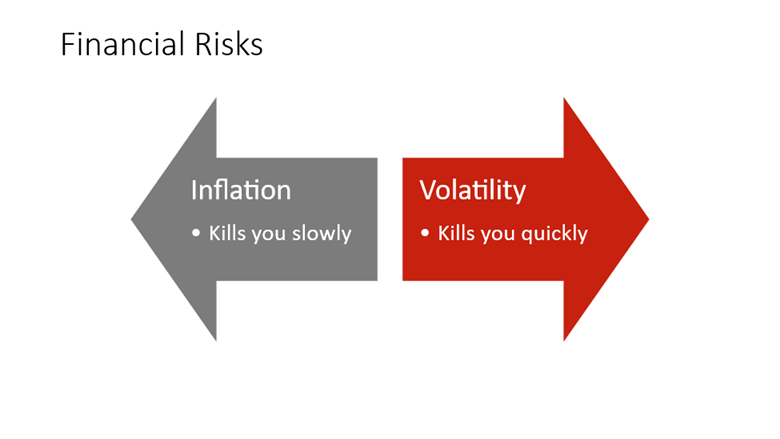
    We are entering a time of immense volatility as far as careers and skills are concerned. All of your formerly safe investments in your career are now penny stocks, NFTs, and crypto. This means you need to reassess what is still safe, what isn’t, and diversify your portfolio of skills and career investments. Power BI is just one investment. It is not and cannot be your career anymore.

    What to invest in?

    Here are my current thoughts on where you should be spending your time and focus if you are starting fresh or feeling anxious.

    Invest in accountability.

    Let’s assume for a moment that AI continues to get really good at data modeling and DAX. My private benchmarks show it’s very good at simple DAX questions and the SQL BI guys have released courses on using DAX with AI.

    Imagine now that a number for sales this month is wrong. Maybe it’s a bug. Maybe it’s confusion about how your company handles returns. Maybe there are two competing definitions for what counts as a sale (do returns count, do free trials count, does freight count?). Imagine the CFO uses the report and ends up embarrassed in front of the CEO. Ask yourself, what happens next?.

    Someone is going to be responsible. Someone is going to be accountable. For self-service reports, mistakes are often low stakes or easily corrected. Low-stakes work will be replaced with AI. So invest in areas that are high-stakes and high accountability. Invest in data quality, invest in debugging and troubleshooting, invest in DataOps and processes. Invest in CI/CD and automated testing. Invest in regulated industries.

    Invest in gut, instinct, and self-expression

    There’s a saying that curiosity is self-annihilating. If you follow your curiosity, eventually you’ll lose it by getting the answer.

    Skillful use of AI is also self-annihilating. What I’ve found most useful is to develop my nose for code smells. Develop my gut for “That doesn’t sound quite right.” Develop my ability to put into words what is wrong and how I would like it to be different. And AI use robs us of the painful experiences that make those lessons intuitive, subconscious.

    There’s an adage: Good judgement comes from experience; experience comes from bad judgement. AI aims to rob us of both experience and bad judgement, leaving us with nothing.

    So how do you work against this? First, is to ask the AI to explain the reason it made a decision, provide alternatives and trade offs, and most importantly provide sources. Now to be clear the LLM doesn’t “know” why it did anything. Fundamentally, these tools are pachinko balls bouncing around semi-randomly. But it does force the AI to elaborate in a way that you can learn about tradeoffs and do more research.

    Second, build something, anything. By hand. I feel a sort of nihilism sometimes. Why bother when the AI could do it 10 times faster. For the same reason you go to the gym when a forklift could bench press 10x more than you ever could. To build those muscles.

    Third, invest in words to express what you want. Learn design, learn vocabulary. I struggle with this mightily when it comes to visuals, UI, and UX. I can tell you something looks bad but I can’t tell you why. Learn the why. Learn how to describe a report with just your words.

    Practice with AI, especially when it’s painful and ugly and inferior

    AI capabilities grow in the same way that people fall in love or fall asleep: slowly and then all at once.

    I’ve seen it with DAX where two years ago the models were making up DAX functions and now, I can’t make single-step DAX questions hard enough to stump frontier models. I’ve seen it recently where I can now give Opus 5.5 the PBIR CLI and the Desktop Bridge feature and it can completely revamp existing reports and they look good. Not great, but good. I’ve seen it recently with Claude Opus 5.5 around motion graphics, video graphics, video games.

    Claude used to be infuriating for me to work with when it came to PowerPoint and UI design. It would stick stupid sublabels everywhere. It would clutter the screen. My vibe coded apps (see below) looked like utter trash. But suddenly with Claude Opus 5.5 and Claude Design, it can finally show me a before and after for a proposed UI and even though I don’t have the words for what I want I can get it. Assume in a year this will exist for report visuals.
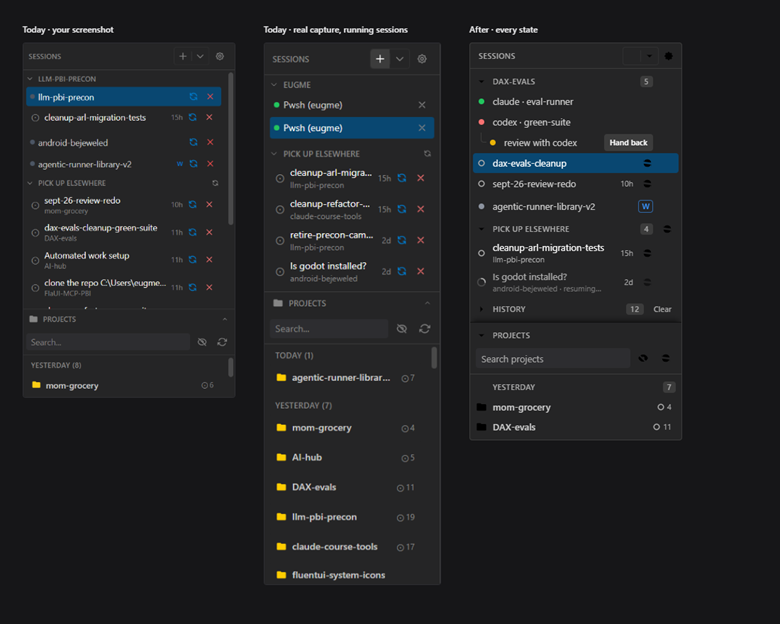
    It’s still uneven and frustrating, mind you. The jagged frontier of AI is fractal and immensely jagged. Sturgeon’s law still applies: most of what AI produces is crap. But you don’t want to be blindsided by that other 10%.

    I deeply recommend doing something, anything with frontier AI models every week. Test it, break it, ask it to do the impossible. Kurt Buhler has a good video on some of what is possible today with AI and Power BI. Understand the peaks of what is possible while acknowledging most of what it does is the low, low valleys.

    Invest in Vega-lite, Vega, and possibly D3.js

    Fabric Apps, Power BI Deneb visuals, Snowflake, and Databricks all support Vega-lite. This means you can use it today in Power BI, use it today in Fabric Apps, and it is AI friendly by design. Vega-lite is ideal for an AI heavy world because it is portable, reusable, and it is a code-like grammar of graphics.

    Vega is available today in Power BI thanks to the Deneb visual and the ground-breaking work of Daniel Marsh-Patrick. Microsoft has confirmed a native Vega visual is on the roadmap for 2027.

    D3 is lower level, but more flexible. You can use it in custom Power BI visuals, Fabric Apps, Qlik, and more. It is worth dipping your toes into D3.js today and being aware of it.

    Along similar lines, I would keep an eye on the developing Ossie semantic model format. It’s possible that it may become the Vega of semantic modeling, but right now it’s far too early to say.

    Invest in data modeling, data engineering, and requirements gathering

    There are things the AI physically cannot know. It cannot know your business and all of its unique intricacies. It cannot know all of the odd and strange exceptions. It cannot know what your users want because even they don’t know what they want until presented with a proof of concept. It will get better at guessing, at interviewing, but I think humans will remain essential here.

    An AI can only infer based on the data and context provided. Some may say that’s what ontologies are for, encoding the meaning of the business, but a human somewhere has to build and maintain those ontologies. A human has to go interview Chris in accounting to understand how the business really works. A human should ideally be accountable for getting it wrong.

    A semantic model is less a store of data and more an implicit agreement among employees of the business about how the business really works. It is a map of the territory. Always wrong and inferior to reality, but also the best we have got. Be a cartographer.

    I think Anthropic’s case study on self-service analytics is instructive here. Just throwing the AI at the data and SQL queries did not work. Just writing the skill files and not maintaining them did not work. Skills had to be maintained alongside the data models and kept up to date. Distractions and wrong choices and wrong models had to be removed or hidden so the AIs wouldn’t get distracted.

    We are all gardeners and beekeepers now. Build the environment, monitor for issues. We are trying to collect honey from these strange creatures and desperately hoping not to get stung.
  • Lessons learned from Self-employment: 7 years in

    |

    It’s January 21st, 2026 as I write this. I’m the happiest I’ve been in years, at least since 2021. I’m the most hopeful I’ve been in years.

    On January 20th, 2025, I spent two days uncontrollably crying.

    In June 2025, I was $20k in debt and expecting to have to find a salaried job.

    So yeah. It’s been a year.

    Living in uncertain times

    I have a lot of colleagues whom I deeply respect and love, who sit on different parts of the political spectrum. I think we would all agree that political polarization is up, political violence is up, AI is going to be horrifically disruptive, and overall, we live in very uncertain times. We may disagree about why and for whom, but I think we agree about the generalities. 2025 was a mess and 2026 is going to be a bigger one.

    So, on January 20th I cried for 2 days straight. I sulked online. I asked for prayers even from folks who didn’t understand why I was distraught. Thank you to everyone who prayed for me and my family. Things are better now, but I’m still gladly accepting prayers from all denominations and good vibes form my atheist friends 😁.

    Ultimately, I felt out of control in terms of maintaining the safety and wellbeing of my family. We would probably be fine, more than fine, but there wasn’t much I could do if I was wrong. It felt like I had just bought a fistful of reverse-lottery tickets with a 1 in a million chance of ruining our lives. Lovely.

    Then my old pastor saw my Facebook sulk-posting. And he asked if there was anything he and his wife could do for us. I told him that his flock needed him more than I did right now, but there was one thing…

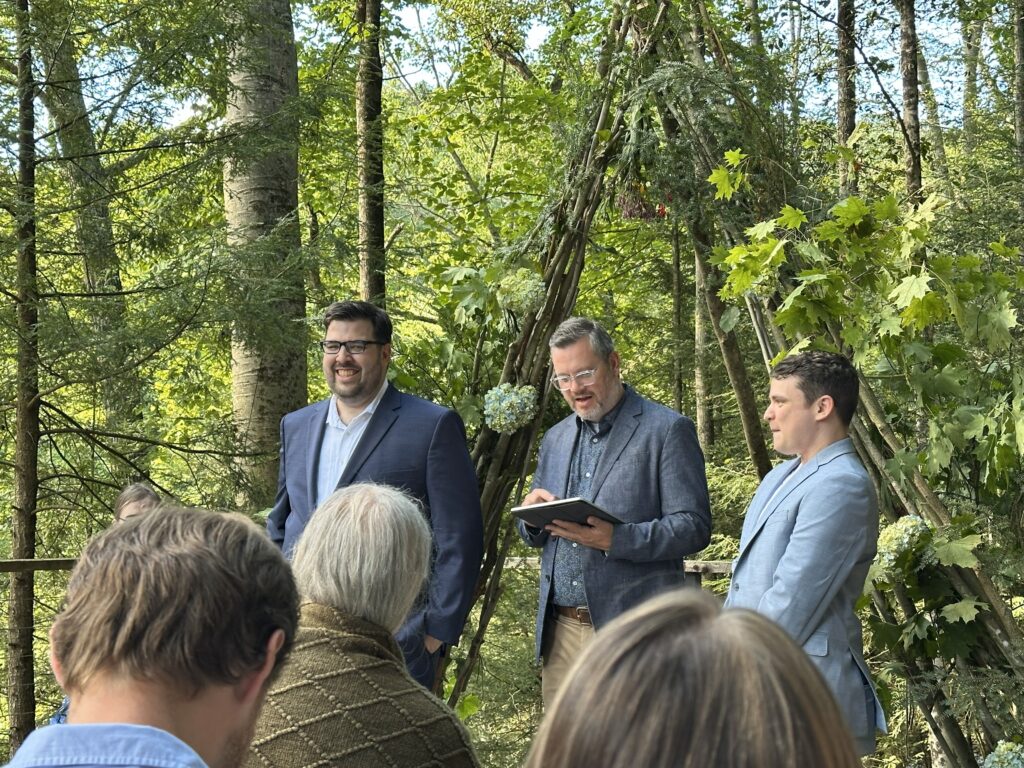
    My husband and I were coming up on our 10-year anniversary and a lot had changed in our lives. Enough that I don’t know if I’d still be married today if it weren’t for my faith. I couldn’t really control the outside world, but maybe I could host a small private protest of sorts. So, in August we renewed our vows on our 10-year anniversary, with a lot of help from friends and family.

    To hell with the world, life is worth living.

    Starting a podcast

    In December of 2024, I decided I wanted to start a podcast. My previous podcast SQLDataPartners was winding down and I was struggling with consistently producing weekly content that algorithm so strictly demanded.

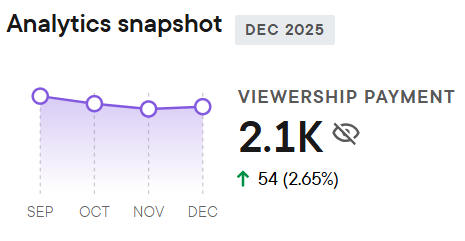
    I would consider the podcast to be a modest success. We have 200-400 regular listeners although I’d love to have 1,000. Trying to make weekly content has been a failure. Too much of my life was a mess, trying to keep a steady even backlog of guests was a challenge, technology issues, etc. As a result I’ve decided to downgrade to every other week.

    I had decided to upgrade to the business version of Riverside for ~$400/mo. That was…stupid. I have very limited access to my digital marketer’s time (15hr/week), so I figured I was paying $100 per episode and if the extra features saved her a few hours per week, it was a huge win. In practice she barely used any of the features. A stupid, stupid waste on my part and an annual contract I regret.

    One thing I am truly proud of is highlighting voices you won’t find on YouTube or at conferences. An instructional design expert, and organizational culture expert, folks early in their careers, all sorts. I even let in some MSFT employees 😉. The thing I think about is I wouldn’t have my career if it wasn’t for Scott Hanselman and for Diabetes Magazine. When I got diabetes I thought my life was truly over, and seeing others that looked like me succeeding at life, kicking ass even, gave me the courage to try.

    I hope my podcast can give young folks the courage to try.

    Financial disaster

    This year was the year of financial disaster. At the beginning of the year, I was a bit of a hot mess and so I wasn’t paying close attention to our finances. We live comfortably in the rust belt, so I didn’t really need to. But Pluralsight retired half of my courses and my revenue from them dropped a significant amount. Over the three years since Pluralsight got bought by private equity my revenue dropped from comfortably covering all of my living expenses to covering mortgage, US health insurance, and a few utilities. Still nice, but not nearly enough to keep me afloat.


    And in 2025 I had committed to too many expenses. Repainting my office, redesigning my website, MVP summit, Fabcon. By the end of Fabcon, I realized I was suddenly broke.

    I did damage control, I took on debt, and by the end of it I had $20k in debt and no real customer pipeline. I had cut down on the consulting to do more courses on Teachable, but I was too much of a hot mess to manage more than 2 courses over 2 years.

    Thankfully, in June a customer was consolidating from Snowflake, Edify (Postgres PaaS), and Power BI to Fabric. They asked if I could help since I had provided Power BI training and support before. I gave them the nickel tour and said “I used to be a DBA and I know Power BI, but I have no ETL experience.”

    The response? “Well you are already in our system, you seem to know what you are talking about. You want to try to help us get Fabric going?”

    I’m quite lucky. This project is the only thing that prevented me from looking for a salaried job and being in debt.

    An elephant in the room – AI

    So why am I so joyful when the world is a mess? Well, I’m finding the joy in AI. I’ve been able to build more than before, troll Reddit by putting the M language in Python, and I’m just having fun. I’ve processed the grief that most of my code moving forward will be AI-written and I’m just riding the wave for now.

    I anticipate that 80-90% of the code I produce that isn’t customer facing will be AI-written. It’s a loss in many ways, but new skills to learn: unit tests, devops, docker containers, scrum, LLM evaluations, etc. I’m hoping I can make content too so people don’t get crushed by the wave. Because it’s coming.

    All in all though, if I could go back in time and un-invent LLMs, I’d do it in a heartbeat. I expect them to be a net-negative on society. But I can’t so I’m making the best of it.

    Oversharing

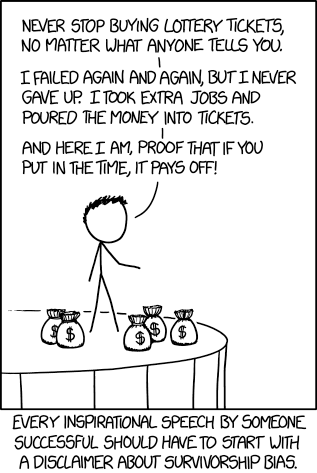
    I’m probably oversharing here. So why? Well partly because I decided that when I became a consultant, I would share the highs and lows, no matter how frustrating. I think a lot of people get burnt by survivorship bias and thinking consulting is for them. It isn’t. Don’t do it.

    But also, I see what AI is doing to our social connections and I hate it. AI slop. LinkedIn toxic positivity. Inauthenticity-as-a-service. I hate it. Where did my friends go?

    These days I’m hard to fire, so I hope this blog can be a bastion of authenticity and lived experience, for as long as I have the energy anyway.

  • Power BI Consulting: What Is in the Course?

    This course is launching April 8th, 2025 for $10 for 24 hours. Then it will be $50 until April 13th.

    Below is a summary of the contents of the course.

    Module 1 – Choosing to consult

    This module is a reality check on why you want to consult and what things you should consider before making the jump. Module 1 videos are available for free on YouTube and on the course site.

    In addition to the videos, there are 3 bonus docs:

    • Readiness Checklist. This is a checklist of thought exercises to make sure you are ready to take the leap.
    • Burn Rate Calculator. This is a simple excel file to estimate your monthly income and see how many months you can work with your existing savings.
    • Recommended Reading List. A list of recommended and optional reading, podcasts, and videos for each module.

    Module 2 – Paperwork

    Module 2 focuses on the paperwork involved with getting started. In short, you will want:

    The module also includes some quick demos on tracking time with Toggl and creating an invoice.

    Module 3 – Sales and Marketing

    This module covers the fundamentals of sales and marketing with core concepts like the AIDA model and the sales funnel. It talks about how consulting is a high-trust work, and your sales and marketing strategy should reflect that.

    Module 4 – How to Scope

    The scoping section covers what goes into a scope of work, and how to estimate time and overall scope. It explains what deliverables are and how they can vary in concreteness.

    It also includes a private custom GPT that you can interact with to practice gathering requirements. If you are stuck, there is a document with a list of questions to ask the GPT. I also very quickly demo using Microsoft Word to write a scope of work.

    Module 5 – How to Price and Contract

    This module talks about three of the main pricing models: hourly, flat rate, and value pricing. It explains how to estimate your hourly rate based on your salary and desired role.

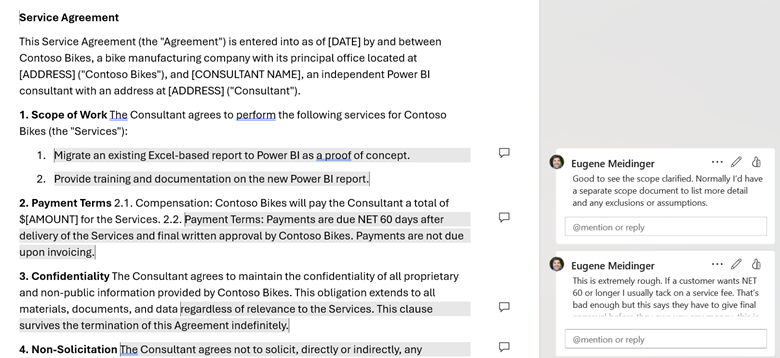
    For contracting, the module covers the gist of what should go into a service agreement and what to watch out for. As an exercise, I’ve included an intentionally malicious service agreement that you need to review for problems. This exercise also has a custom GPT for practicing contract negotiation. As part of the exercise, I have a marked-up version of the contract if you are stuck finding problematic clauses.

    Module 6 – Your First Project

    This final module helps to answer the question of how you know you are ready skill-wise. It talks about some of the mental health hurdles to expect when working for yourself. Finally, it covers some specific technical details of Power BI consulting and that first customer.

  • Lessons learned from Self-employment: 6 years in

    On some level, I’ve started to hate writing these blog posts.

    The original intent was to show the ups and downs of being a consultant, inspired by Brent Ozar’s series on the same thing. There’s a huge survivorship bias in our field, only the winners talk about self-employment, and the LinkedIn algorithm encourages only Shiny Happy People. But when you enter the third consecutive year of the 3 most difficult years of your career, you start to wonder if it might be a you problem. So here we go.

    Pivoting my business

    Two years ago, Pluralsight gave all authors a 25% pay cut and I knew I needed to get out. I reached out to everyone I knew who sold courses themselves for advice. I’m deeply grateful to Matthew Roche, Melissa Coates, Brent Ozar, Kendra Little, and Erik Darling for the conversations that calmed my freak out at the time.

    One year ago, I learned that I can’t successfully make content my full-time job while also successfully consulting. Consulting work tends to be a lot of hurry-up-and-wait. Lots of fires, emergencies, and urgencies. No customer is going to be happy if you tell them the project needs to wait a month because you have a course you need to get out. Previously with Pluralsight I was able to make it work because they scoped the work, so it was more like a project. Not so when hungry algos demand weekly content.

    So, I cut the consulting work to a bare minimum. Thankfully, I receive money enough from Pluralsight royalties that even with the cut we never have to worry about paying the mortgage. However, it’s nowhere close to covering topline expenses. At the beginning pandemic, $6k/mo gross revenue was what we needed to live comfortably (Western PA is dirt cheap). After the pandemic, I hired a part time employee, inflation happened, and I pay for a lot more subscriptions, like Teachable and StreamlineHQ, so that number is closer to $9k/mo now.

    I can confirm that I have not and never will make $9k/mo or more from just Pluralsight. My royalties overall have been stagnant or even gone down a bit since the huge spike upwards in early 2020. So it’s not enough to live off of alone.

    Finally, after a lot of dithering in the 2023, I decided to set a public and hard deadline for my course. We were launching in February 2024 hell or high water. I launched with 2 out of 7 modules and it was a huge success, making low four figures. I’m grateful to everyone who let me on to their podcast or livestream, which provided a noticeable boost in sales.

    Unfortunately, I had a number of projects right after launch, taking a lot of my focus. I also found out that this content was much much more difficult than the Pluralsight content I was used to. There was no one from curriculum to hand me a set of course objectives to build to. No one to define the scope and duration of the course.

    What’s worse, the reason there is a moat and demand for Power BI performance tuning content is almost no one talks about it. You have dozens of scattered Chris Webb blog posts, a book and a course from SQL BI, a course by Nikola Illic, and a book by Thomas LeBlanc and Bhavik Merchant. And that’s about it?

    I thought I was going to be putting out a module per week, when in reality I was doing Google searches for “Power BI Performance tuning”, opening 100 tabs, and realizing I had signed myself up for making 500 level internals content. F*ck.

    A summer of sadness

    All at the same time I was dealing with burnout. My health hadn’t really improved any over the past 3 years and I was finding it hard to work at all. I was anxious. I couldn’t focus. And the content work required deep thought and space and I couldn’t find any. I felt a sense of fragility where I might have a good week the one week and then have a bad nights sleep and derail the next week.

    I hadn’t made any progress on my course and a handful of people reached out. I apologized profusely, offered refunds, and promised to give them free access to the next course. If you were impacted by my delays, do please reach out.

    In general, I decided that I needed to keep cutting things. I tried to get any volunteer or work obligations off my plate. The one exception is I took on bringing back SQL Saturday Pittsburgh. With the help of co-organizers like James Donahoe and Steph Bruno, it was a lot of work but a big success. I’m very proud of that accomplishment.

    Finally turning a corner

    I think I finally started turning a corner around PASS Summit. It was refreshing to see my friends and see where the product is going. Before Summit, I had about 3.5 modules done. In the period of a few weeks I rushed to get the rest done. This was also because I really wanted to get the course finished for a Black Friday sale.

    The sale went well, making mid three figures. Not enough to live on, but proof that there is demand and it’s worth continuing instead of burning it all down and getting a salaried job. Still, I recently had to float expenses on a credit card for the first time in years, so money is tighter than it used to be. Oh the joys of being paid NET 30 or more.

    Immediately after Black Friday, I went to Philadephia to delivery a week long workshop on Fabric and Power BI. The longest training I had ever given before was 2 days. The workshop went well, but every evening I was rushing back to my hotel room to make more content. You would think that 70 slides plus exercises would last a whole day, but no, not even close.

    Now I’m back home and effectively on vacation for the rest of the year and it’s lovely. I’m actually excited to be working on whatever whim hits me, setting up a homelab and doing Fabric benchmarks. It’s the first time I’ve done work for fun in years.

    I’m excited for 2025 but cautious to not over-extend myself.

  • Lessons learned from being self-employed: 5 years in

    |

    Content warning: burnout, health issues

    I have not been looking forward to writing this blog post. I started the series, inspired by Brent Ozar’s series, because being able to see how the other side lived helped me to evaluate the risks and take the leap to work for myself. Unfortunately, that commitment means writing about one of the worst years of my career, and what has felt largely like a waste.

    A health scare

    2023 started off in a state of burnout, techniques for recovery that worked in the past had stopped working. I was forced to try taking 2 consecutive weeks off for the first time in my career, and it helped dramatically. Also, during this time I was panicking about the change in payments from Pluralsight, and I reached out to everyone I could think of who sold courses or had a big YouTube channel for advice. Thank you to everyone who spent the time to help.

    As a result I had decided I was going to start selling my own, self-hosted courses. I think I had hoped that I could just ramp up the social media a smidge, ramp down the consulting a smidge, and make it all work. If I could go back in time, I would have cut down on all extraneous commitments and focused just on this. Instead, I tried to make it all work, because of what I thought I “should” be able to accomplish, or what I had been able to accomplish in years past.

    Around this same time, Meagan Longoria (along with others) convinced me at SQLBits to raise my consulting rates by 30%. Meagan has the tendency to be painfully blunt, while also being kind and empathetic. I think it’s difficult to nail both candor and kindness at the same time.

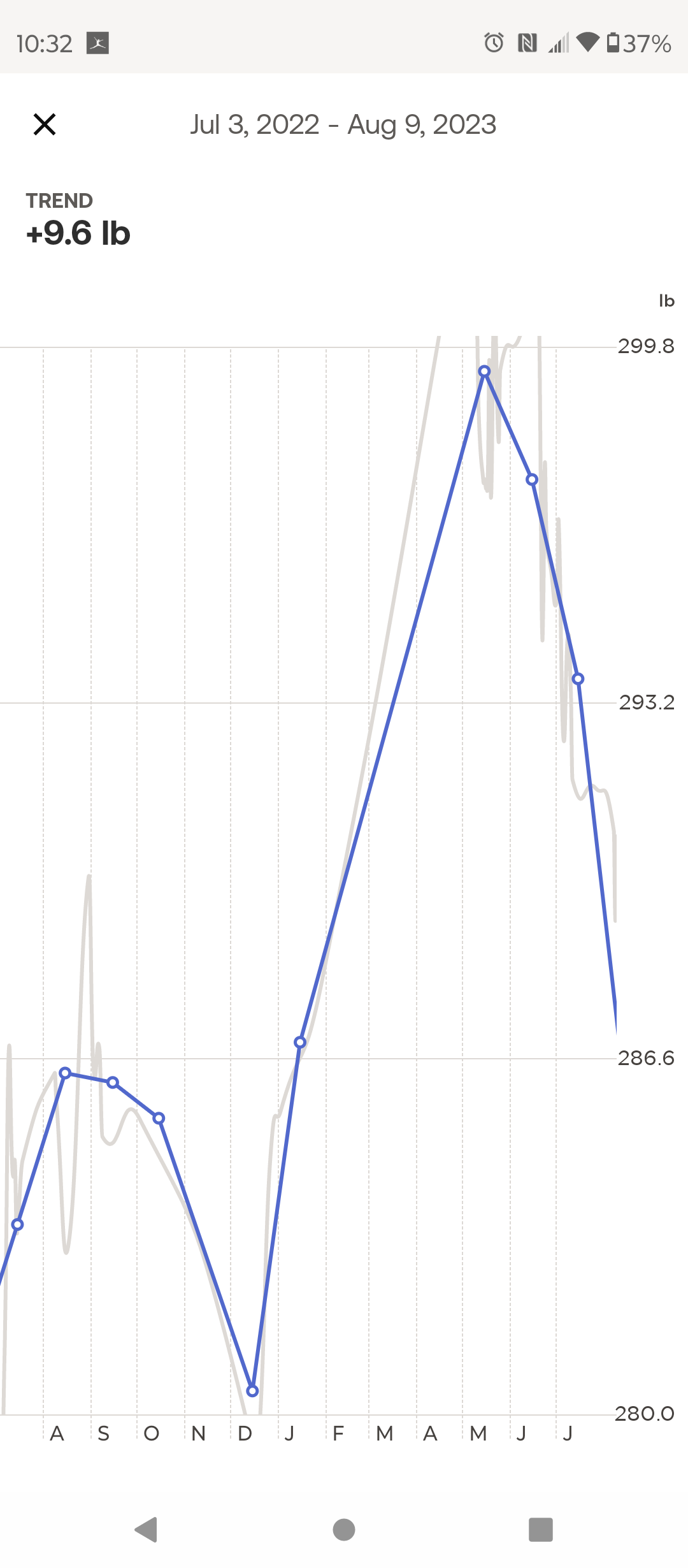
    The health scare came in March, when I started weighing myself again. Travel from Bits and work had caused me to fall out of habit with exercising. What I found was I was the heaviest I had been in my entire life at 300 lbs. Even heavier than when I was in college and considered myself fairly obese. I had gained 20 lbs in 3 months, which as a diabetic is very very bad.

    Barreling towards burnout

    I decided I needed to do something, so I bribed myself with a Magic the Gathering booster every morning I exercised, and a Steam Deck if I could do that daily for 3 consecutive months. Overall, that worked, but I did find that in my mid 30s, it’s hard to just push through like that. I have to be careful, or I’ll develop plantar fasciitis or some other issues for a while.

    At the same time, however, my work requirements had picked up. I had signed up for a volunteer position with a local organization that had become very stressful. I had work projects that had dragged on longer than they should and were starting to frustrate my customers. And I had found that the branding and marketing of selling my own courses involved much much more work and executive function than I had realized.

    I did end up contracting and then hiring part time a local college grad to be my marketing assistant. She was recommended via a close professor friend of mine and overall she has been great. The biggest challenge has been acclimating someone to our particular niche of the data space and what the community is like.

    Around June, I realized I was simply spread too thin. I had experienced being physically unable to get out of bed any sooner than was physically necessary. I was physically unable to get up an hour early for work to try to push through a project or deadline. I was should-ing myself to death, taking on more than I could handle because I thought I should be able to do more, because I thought people would be disappointed in me if I had to close out projects and work.

    Ultimately, the largest threat to my health and well-being was my own personal pride.

    Turning the corner

    Thankfully I did decide to wind down as much of my consulting work as I could. It took multiple months longer than I would have preferred, honestly. I closed out any open projects that I could easily do so, and now I’m down to 2 customers that are a few hours per week. I also decided that I wouldn’t take on any new projects during November or December.

    I’ve also been focusing on making that course and I officially have given myself a hard deadline of February 5th. At the moment I have absolutely no idea how well it will do. If it does well, that means I can continue to focus on making training content for a living. If not, I’ll have to consider pivoting into more of a focus on consulting or going back to a regular job. I would have preferred to be releasing this in the summer of 2023, but here we are.

    I think the hardest thing to grapple with regarding burnout, is the uncertainty of how long it will take to recover and how aggressive you have to be in resting to recover. I’m grateful to both Matthew Roche and Cathrine Wilhelmsen for putting that into perspective.

    There are days that I feel much better, I feel energetic and enthusiastic. Coming back from PASS Summit, I felt that way all week. But at the moment it’s still fragile, and I have to remind myself that a good day in a week doesn’t mean the issue has been totally solved yet.

    One other thing, I always struggle with the lack of sunlight in the winter. For the first time ever, I’m being proactive about it and going somewhere warm in December instead of January or February when the issue becomes apparent. So, I’ll be spending Christmas week in San Juan, Puerto Rico where it is currently 80 degrees Fahrenheit. See y’all on the other side of 2024.

  • Hustle culture, welcoming everyone, and taking care of yourself.

    Imagine for a moment that you went to the gym, and everyone there was really fit. Muscular and tone. You look around for cameras because you think you might be at a photo shoot. How would that make you feel? You might be excited because you are in the right place to improve. Or you might be like me and worry about fitting in, worry about annoying folks, worry that your goal of being a little bit healthier is too small.

    That’s how YouTube is for me. I look at Guy in a Cube, and SQLBI, and Curbal; and I feel inferior. I think I’ll never charge those rates, I’ll never have that many subscribers, I’ll never reach that pinnacle. It’s demoralizing. It’s also utter horsecrap. I’m pretty sure they all see me as a peer.

    Imagine again that in that gym you go to talk to one of the instructors and they say “If you want to become an Olympic level athlete, you will have to train for YEARS. If you want to be the best of the best you need 10,000 hours of dedicated practice. You may have to spend 20, 40, or 60 hours per week training to reach that level!”

    Would you feel pumped up? Would you feel inspired? Would you feel excited?

    Personally, I would leave that gym. And I would never come back, because it wasn’t a place where I belonged.

    The problem with hustle culture

    Hustle culture, like most cultures, has some admirable values. Grit, determination, and self-reliance are positive virtues. But taken to an extreme, it places all on the onus on the individual to “work” their way through any problem. In the past, I’ve hurt myself and others because of this mindset.

    I worked at my last job far longer than I should have, because I thought if I just worked harder and more hours, I could fix it all. I thought I just needed to get better, faster, smarter. In reality, the kindest things I did for everyone was quit my job.

    I’m painfully German, so the way I show love is through acts of service, not kind words, not quality time. My German grandpa showed me love by having me pour concrete. I’m not sure if he ever said “I love you”. And in my marriage, I thought I was only of value if I was “doing” things. I didn’t value just being present, and that led to some bumps the first few years of our marriage. I always thought I had to be “doing” something to earn my place.

    Hustle culture places all of the responsibility on the individual. It ignores the role of community and society. It blames the individual for all of their problems. We as a community can do more than that. We can take on each other’s challenges.

    Welcoming everyone

    I hope you will forgive the religious reference that follows, but I believe that if you take the Christian faith seriously, truly seriously, then you have to believe that every single person is important. Every single person is made in the image of God and deserving of respect. Regardless of how many hours they work or their career aspirations.

    It’s good to inspire greatness, but it’s better to remind people that they are already great.

    And if you continue to take that faith seriously, then you have to be willing to meet people wherever they are, in whatever circumstances they are in, and be present. Be present and witness their suffering. See the single parent that is trying to manage parenting and a job at the same time. See the woman whom everyone assumes that she works in marketing or HR, and see her struggles and anger. See the person with depression or anxiety that struggles to get out of bed, much less make it through the work day.

    To welcome everyone, we have to see everyone. And to see everyone, we have to tolerate their pain and suffering, and bear part of it ourselves.

    Taking care of yourself

    People making proclamations about what you should do or must do, they don’t know your life circumstances. They physically can’t. You know your limits and you should respect them. And even that inner voice in my head that compares myself to people on YouTube often forgets the full picture.

    I spent last Sunday bringing my mom over to my house so we could bury her dog. It was sad, and it was human, and it was the best way I could have spent that Sunday. Better than anything work could provide.

    In 2022, I worked too much and got myself burnt out. This year, I want to work less, take better care of myself, and stop comparing myself to subscriber counts on YouTube.

  • How I evaluate personal safety at tech conferences

    How I think about safety at the events has changed dramatically over the past 10 years. When I was young and unmarried, I didn’t think about it at all. I’m 6’2”, heavy set, and broad shouldered; no one is going to mess with me. And regarding emotional safety, I may have had worries or concerns about fitting in or being accepted, but I never thought of it as safety.

    That has changed over time, as I learn that other people’s lived experiences were dramatically different than mine. It changed when my female-presenting spouse was harassed at a SQL Saturday speaker’s dinner. I had made a joke to a speaker I just met that “my spouse only wears dresses 3 times per year, and one was at our wedding.” He made a joke in kind that would have been appropriate if we were friends for years. We had just met. Later that night when he made another comment, I had to quickly shut it down.

    My appreciation for safety again changed when my husband came out as transgender. We’ve thankfully never had an issue at any event, and everyone we’ve talked to has been warm and welcoming. But now what was once background noise for me is something I pay close attention to, hoping I don’t hear sirens.

    How should we think about safety?

    The way many lucky people like myself normally think about the word safety is unhelpful in this context. 10 years ago, I would hear the word and think about muggings and stabbings. Now, I think a better analogy is food safety.

    Think about how you evaluate leftovers in your fridge to see if they have gone bad. You think about how old they are, you give them a look, and a sniff. I can count the number of times I’ve had food poisoning on one hand, I will regularly eat undercooked food. I am privileged in that regard. But many of us have had bad experiences with old food. We’ve found mold or had food poisoning. One bad experience and you start just throwing it out instead of risking it.

    Think about how you evaluate restaurants. Do you look at the inspection notices? If your friend says they had food poisoning there once, how does that change your evaluation? You might write it off as bad luck. What if three of your friends have had food poisoning at a restaurant? You’d probably never go there and would tell others to avoid it as well. It’s rarely a binary decision.

    For some people, food safety is deadly serious. If you have a peanut allergy, one thoughtless mistake could kill you. For me, I’m a diabetic and I learned the hard way that IHOP puts pancake batter in their scrambled eggs. What the heck! If I hadn’t tasted something was off, that could have sent me to the hospital. And that’s often the issue, I can eat peanuts thoughtlessly and safely. But for others it could harm them or kill them.

    How I evaluate safety at conferences

    So coming back to our topic, imagine if at every single restaurant you didn’t know how fresh the food was, and no one could tell you. What would you do? You would inspect it. You’d check for mold or hairs, you would give it a sniff. You might give it a small taste. Or maybe you’d provide your own food because of too many past incidents.

    Based on my own personal lived experiences and what I’ve heard from others, I believe this is what it’s like to be a woman or queer in IT. You always have to inspect and sniff the food. And unsurprisingly, the chef is likely to take this personally as an insult. “I would never serve bad food!”. Well, maybe not intentionally you wouldn’t. But I can’t afford to assume that.

    In the book, The Speed of Trust, trust comes down 2 things at the end of the day: character and competence. As a speaker and an attendee, I’m constantly sniffing out these two things out at every single event I attend, all while trying not to offend the chef.

    Character in this case is your ability to acknowledge and understand these issues. If your conference does not have a Code of Conduct, maybe you don’t understand the benefits of one, or you need help writing it thoughtfully. If your conference is adamantly unwilling to have a code conduct, that’s like denying food inspectors into your establishment because your chefs are “well-trained”. In which case, I have no interest in attending or supporting your event. You could send me to the hospital.

    Competence is your ability to execute on your character. You may have the best of intentions here. But if you espouse a commitment to diversity or new speakers at your conference, but have a very short CFS or 100% blind submissions, that sends mixed messages. While I can’t determine the cause, I will assume that either your values are false or that there is a challenge in your ability to execute on them. Sometimes it’s totally innocent reasons, but if I have a peanut allergy I don’t give a damn about whether it was an accident that my meal included peanuts. I simply can’t afford to ignore it, for my own safety.

    So what can you do to signal safety?

    Simply put, talk the talk and walk the walk.

    Have a code of conduct, have a policy for harassment. But more than that, think about how you support unrelated marginalized groups. If a conference provides child support, I will see that as a “smell” of good character and competence even if I don’t have a child. Conversely, if they put pronouns in the bios but have 0 other DEI initiatives, I will read that as virtue signaling. I could be wrong in either case, but all I have are sniffs and tastes.

    Talk the talk and walk the walk.

  • Why I’m struggling with learning Azure Synapse

    So, for 2023 I’ve decided that I want to learn Azure Synapse. I want to be able to make training content on it by the end of the year. I’d like to be able to consult on it in two years. And right now, I am absolutely banging my head against the learning curve. Let’s talk about why.

    The integration problem

    Occasionally, I’ll describe Power BI as “3 raccoons in a trench coat: PowerQuery, DAX, and visuals”. What I mean by that is it is 3 separate products masquerading as a single, perfectly cohesive  product. Each of those pieces started out as separate Excel add-ins, and then were later combined into a single product. And it shows.

    The team at Microsoft have done a great job of smoothing out the rough edges, but you still occasionally run into situations where the integration isn’t perfect. A simple example is where should I create my date tables in Power BI? Should I use M or DAX? The answer is either! Both of them have good tooling for it. Because these tools evolved separately, there’s going to be some overlap and there’s going to be some gaps.

    Azure in general (and Synapse in particular) has this problem. If Power BI is 3 raccoons in a trench coat, Synapse is 10 of them wobbling from side to side. The power of the cloud is that Microsoft can quickly iterate and provide targeted tooling for specific needs. If a tool is unpopular or unsuccessful, like Azure Data Catalog, Microsoft can build a replacement, like Azure Purview.

    But this makes learning difficult. Gone are the days of a monolithic SQL Server product where, in theory, all of the parts (SSRS/SSIS/SSAS) are designed to fit cohesively into a single product. Instead, Microsoft and us data professionals must provide the glue after the fact, after these products have evolved and taken shape. Unfortunately, this means understanding not only how these pieces fit together but when in practice they don’t.

    This is the curse of the modern cloud professional. We are all generalists now.

    The alternatives problem

    The other big problem is just like the issue with M and DAX, there are multiple tools available to do the same job. And while M and DAX compete on the borders or on the joints, Azure Synapse has tools that are direct competitors. The most prominent example is the querying engines.

    From what I understand, Azure Synapse has 3 main ways to access and process data: dedicated SQL pools , dedicated Spark pools, and SQL Serverless. Imagine if I told you that you had 3 ways to cut things: a scalpel, a butter knife, and a wood saw. These all cut things, it’s true. But then imagine if I immediately dived into what type of metal we use for our butter knives, that our saws have 60 teeth on them, etc.

    It would be a little disorienting. It would be a little frustrating.

    You might wonder how we ended up with 3 different tools that do similar things. You might wonder when you should use which. You might wonder when you shouldn’t use one of them especially. Giving your learners the general shape and parameters of a tool is a big deal.

    Imagine if a course on Azure ButterKnife™ instead started with “This is Azure ButterKnife™, it is ideal for cutting food especially soft food. It shouldn’t be used on anything harder than a crispy piece of toast. It originally started as a way to spread butter on toast.” It would take 20 seconds to orient the learner, and if they were looking for a way to cut lumber, they could quickly move on.

    The expertise problem

    When I was doing a course on ksqlDB for Kafka, I ran into a particular problem. Because ksqlDB was a thin layer of SQL on top of a well-known Kafka infrastructure, so much of the content assumed you were experienced and entrenched in the Kafka ecosystem. It quickly covered terms and ideas that made sense in that world, but no sense if you were coming from the relational database world.

    And a thing I would keep asking, to no one in particular, was “How did we end up here?”. What was the pain point that caused people to create an event stream technology and then put a SQL querying language on top instead of just using a relational database. I talk about this more on a podcast episode with the company that made ksqlDB.

    Azure Synapse has a similar problem. It is an iteration on various technologies over the past decade. And it’s designed to support large datasets (multi-terabyte) and complex enterprise scenarios. And so a lot of the content out there assumes a certain level of expertise, in part because the people interested in it and the people training on it are both experts.

    The challenge this presents is twofold. First, the more of an expert you are, the harder it is to empathize with a new learner. Often the best teacher is someone who learned a technology a year ago, and remembers all the stumbling blocks. This is a challenge I struggle with regularly myself.

    The other issue is that the content often pre-supposes the learner knows what the foundational technologies are and why they are important. It might assume the learner Knows what delta lake is, and what parquet is, and um, why are we storing all our data in flat files to begin with???

    That’s not to say that every course needs to be a 9 hour foundations course. But there are ways to briefly remind the viewer why something is important, what pain point it solves, and why they should care. And if they are totally new, this helps orient them quickly.

    For example, a course could say “Here we are using the delta lake approach. This allows us to enhance the efficient column storage of parquet files with ACID compliance that we usually lose out on when using a data lake.” This explains to new learners why we are here and reminds seasoned learners why they should care. This can be done quickly and deftly, without feeling like you are talking down to experienced learners.

    So now what?

    I’m hoping this will help folks who make content in this area. If nothing else, I hope it will be a reminder to me a year from now, when I’ve forgotten what a pain this was. In the next blog post, I’ll write about the instructional design techniques people can use to get around these issues.

  • Lessons learned from being self-employed: 4 years in

    |

    2022 was my best year financially and probably my worst year personally. This was the year that we achieved financial independence. We had 6-12 months of expenses in the bank and the royalties were covering our living expenses. It was also the year that I found that a relaxing weekend off wasn’t enough any more, that bouncing back wasn’t working anymore.

    Too much, all at once

    2021 was very quiet year as far as my consulting was concerned, about 10% of my revenue was consulting and the other 90% was royalties and completion payments. In 2022 that changed, however.

    There was about 3 months where I was billing 20-30 hours per week on top of signing up for a new course near the end of it. Because the royalties were covering my expenses, this all went right into savings and we ended up with 6-12 months of savings. This is a consultant’s dream.

    Unfortunately, life was occurring at the same time.

    My husband had an elective surgery that we were planning for months. It went great and he’s completely recovered. What this meant, though, is that I was tasked as nurse for 2 weeks and janitor for 3 months. I was suddenly doing all the chores that I had taken for granted, while also working 40-50 hours per week.

    Near the end of this my mom started having issues as well. The isolation of Covid was finally taking it’s toll and she was having more issues. She was clearly lonely and bored and only really got out of her apartment every other week.

    This also has been largely resolved, but for a while I was bribing myself with Magic the Gathering boosters to call her every day and check up on her. We’ve increased the services that she’s receiving, and she gets out twice a week now, but during the summer it was a really challenging time.

    When your body stops working

    I think many would describe what I went through as burnout. I’m not sure of the right term, but stuff just stopped working. More coffee didn’t help. I would schedule a weekend to catch up on a course and get nothing done. I would take a few extra days off, to no lasting effect.

    Something broke.

    Realizing I needed something more, I schedule 2 weeks off at the end of the year. As a consultant it’s difficult to take time off unless you plan it far in advance. It’s even more difficult if you feel like you are always behind on projects. I only made 2 courses this year and the second one was 3 months late, horrifically overdue.

    I’m one week in and I think this was 100% the right choice, I needed a deeper rest to catch up from the last 3 years.

    A gut punch from Pluralsight

    A couple of years ago, Pluralsight was purchased by private equity. I was cautiously optimistic at the time that this might enable them to get away from the quarterly cycle of the stock market. The results were mixed, with them making a very large acquisition of A Cloud Guru, which is still resolving.

    But in December this year, the company had 20% layoffs essentially firing 400 employees. There were also changes for authors, and while I can’t get into the details, I’m expecting my royalties to go down 25%. This will put me below sustainability, with royalties no longer covering 100% of my living expenses.

    So now what

    For now I’ve been focusing on enjoying my vacation, recovering from 2022, and not worrying about the short term. I’ve also been reaching out to colleagues and peers, asking for advice.

    I no longer see PS as a sustainable career, which means looking into doing more consulting or selling my content elsewhere. I could also get a regular W-2 job, but I would lose much of the flexibility that helps me take care of my mom.

    In the end, I think I’ll be fine. But I have no idea what I’ll be doing for a living by the end of 2023.

  • Getting over yourself: 5 reasons why you should present

    If I would write a book on becoming a technical presenter, chapter 0 would be on deciding to actually do it. This is the biggest hurdle for folks, they seem to always come up with reasons why they shouldn’t. This is totally understandable! I was practically shaking when I gave my first presentation, but if I had never taken that first step, I would never be able to making training content for a living.

    So in this blog post, I’m going to try to help people get past step 0. Some of the reasons are altruistic and some of them are more selfish, but I think there are plenty of reasons why you should do it.

    1. Learners have a unique perspective

    I think the biggest issue is folks feeling like they have to be experts, like they have to be perfect. That simply isn’t true. I do think it’s important to preface the beginning of a talk with your experience level, to set expectations. But beyond that, you are golden. Often times in my line of work, I have to learn a new piece of technology in two months and then make a course on it.

    To emphasize the previous point a bit more, people who are just learning a technology or are new in a field have a unique perspective that is difficult to find. Good teaching involves an aggressive sense of empathy for your audience, for the learner. And the longer you have been working with a technology, the harder that becomes. Very quickly you forget how hard it is to get a development environment up and running. Very quickly you forget how unintuitive some of the technical terms are.

    Learners are going to have a greater sense of empathy with their audience and can warn people about the roadblocks with getting started. This is a rare resource.

    2. The community needs new speakers and fresh faces

    I know when I was helping run the local Power BI user group, it was a challenge to find speakers. I gave probably a third of our presentations the first year we got started, jsut to try to fill the slots. I think the biggest challenge of running a user group is finding speakers, and user group leaders are always grateful when someone volunteers to speak, regardless of their skill level.

    But beyond local groups, the broader community needs new and different speakers. Because of the amount of effort and resources speaking requires, and because of the bias towards “expertise”, you tend to have the same handful of speakers talking about a given subject.

    These folks can often be opinionated or set in their ways. It can be value to have other folks who have a fresh perspective, who can help identify different ways of doing things. This is especially true in areas like business intelligence, where it is less about best practices and more about the context of the business you are working in.

    3. Sharing content is the best way to learn

    Ultimately, to learn well we need something that challenges our assumptions and identifies gaps in what we know. Reading blogs or watching videos usually doesn’t do this because there are two layers of bias going on.

    First, it only includes what the author thought was important to include. This often doesn’t include gotchas, edge cases, or things the author assumes everyone knows already. Second, there’s your own bias. When we are doing just-in-time learning, we are often focused on solving a specific problem and will learn just enough to feel comfortable solving that problem. Rarely do we ask “Okay, what am I missing? What could go wrong?”.

    But when you try to do something in your homelab, you often find all the setup tasks that weren’t mentioned in the tutorial. You find the things that could (and do) go wrong. When you give a presentation, you think through all the questions someone might ask and so you are forced to learn a subject more deeply.

    And as you present multiple times, you run into different questions and develop and intuition for the kinds of things someone might ask you. Giving a presentation with demos is often the best of both worlds, because you have to test it and anticipate whatever questions people might have.

    4. Becoming a good speaker takes time and practice

    Becoming a good presenter takes time, there’s just no way around it. Even if you are naturally good speaker, there are a set of skills you can only get from practice. One of the biggest one is pacing. When I started speaking, I would either get nervous and speed through my content, or I would get too excited and go over on time.

    Being able to stay focused, manage your time, and handle questions or interruptions are all things you have to learn through practice. If you wait until you are an expert speaker to start speaking, this will never happen. Depending on your experience, you might have to present a dozen times to really find your voice and pace.

    5. Speaking is good for your career

    Presenting is, in my opinion, great for your career. No one should feel obligated to speak as part of their career growth, but it provides a chance to practice a bunch of skills that may not come up normally in your day to day work. In my experience, if you can get comfortable speaking to 70 strangers, it become much easier to talk with 2 of your coworkers. By practicing refining your content, your communication in general become more clear and crisp. But anticipating questions in your presentations, you anticipate things that could go wrong in a project.

    It’s also a chance to develop peer relationships that will help you throughout your career. When I go to events these days, the thing I cherish the most is sitting in the speaker’s room and just hearing people chat. I’ve been able to build connections and get my name out there, which has been tremendously helpful for my career. And as a result, when I need help with something, I’ve been able to reach out to those speakers for help and vice versa.

    Summary

    In summary, speaking can both provide a unique perspective for your audience, and help you grow both as a presenter and as a technical expert. Local user groups and virtual groups are often grateful to have new speakers and can provide a low-risk environment to work on your skills and grow. As time goes on, it can open up opportunities such as consulting that depend on having those communication skills.